
At the University of Cincinnati, the installation of 20 automated RecRe rental lockers has become a broader test of how technology can expand access to everyday resources while preserving staff capacity for more complex student needs.
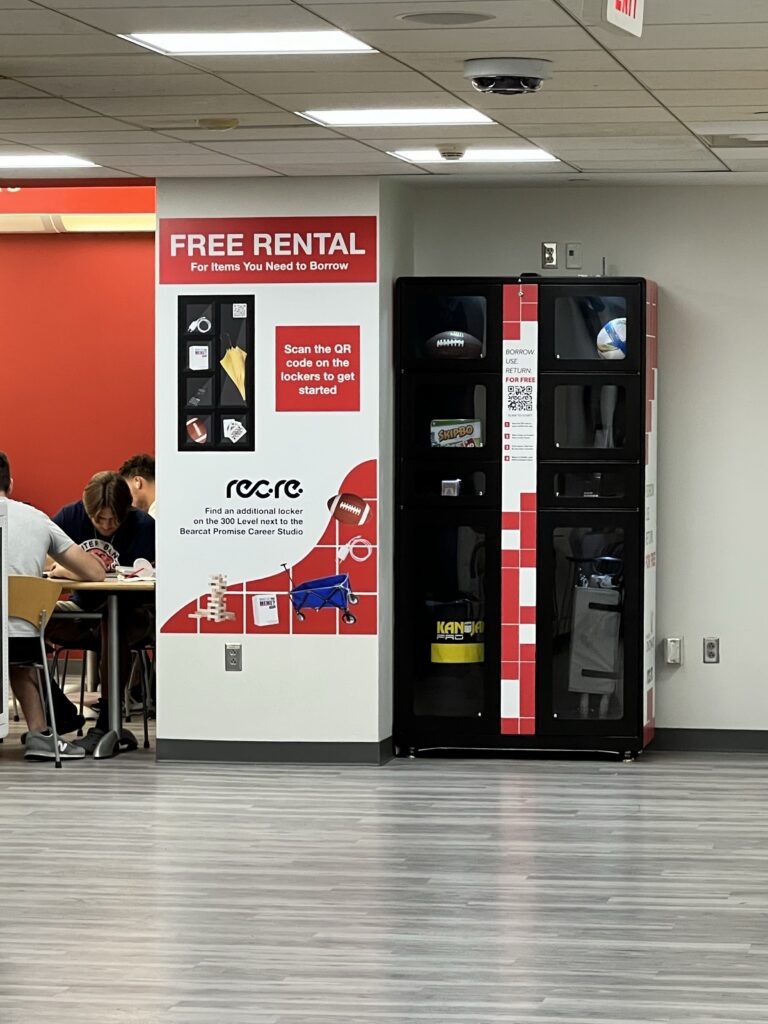
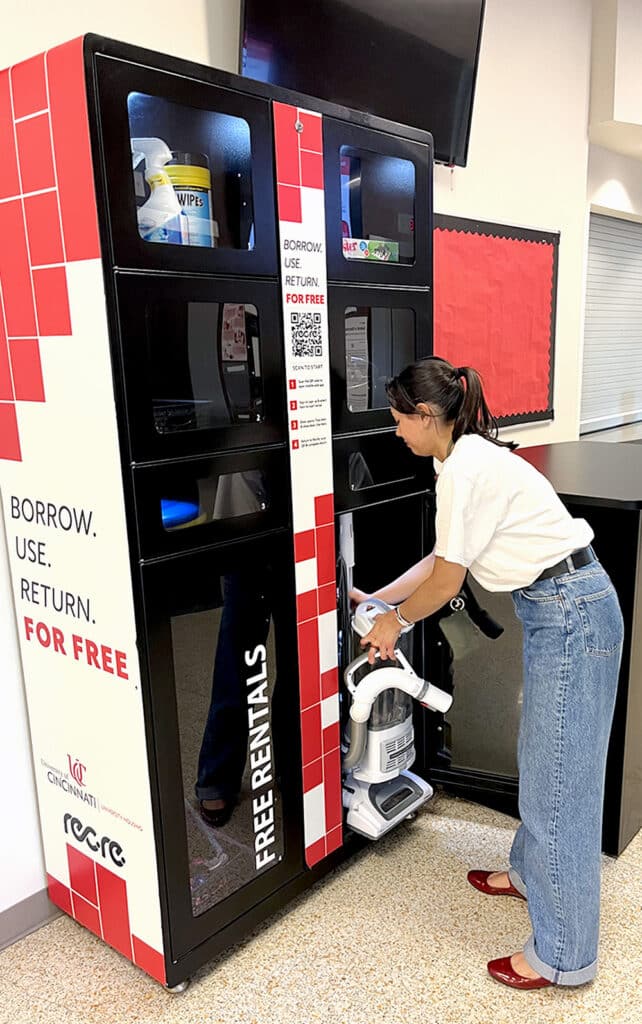
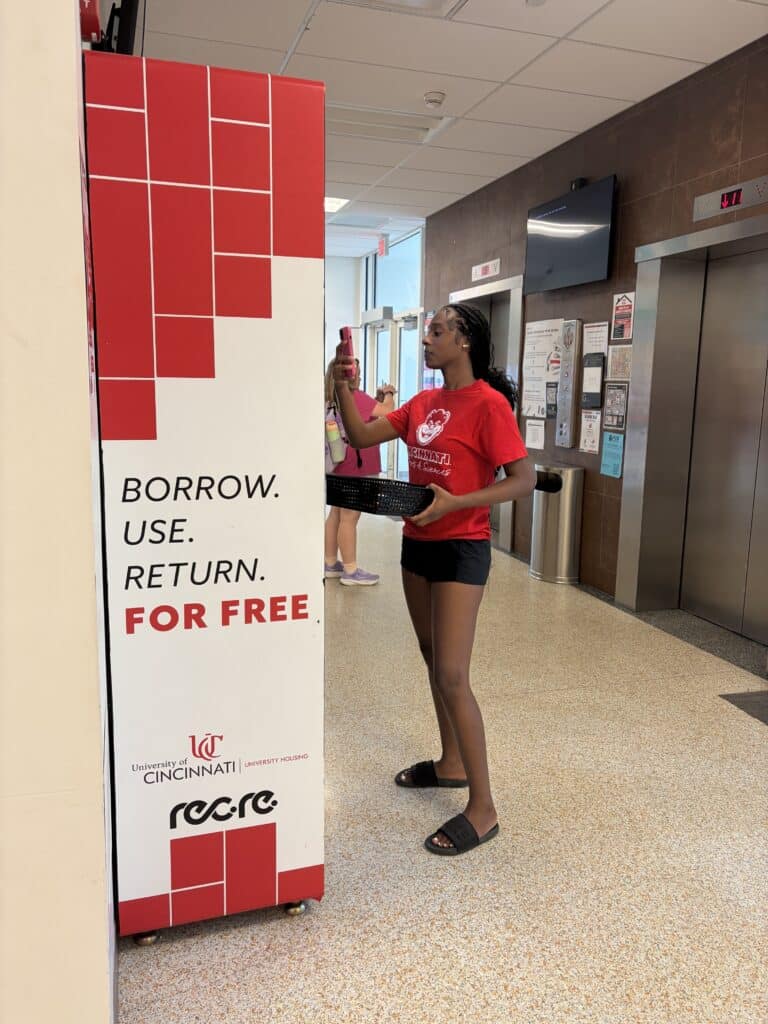
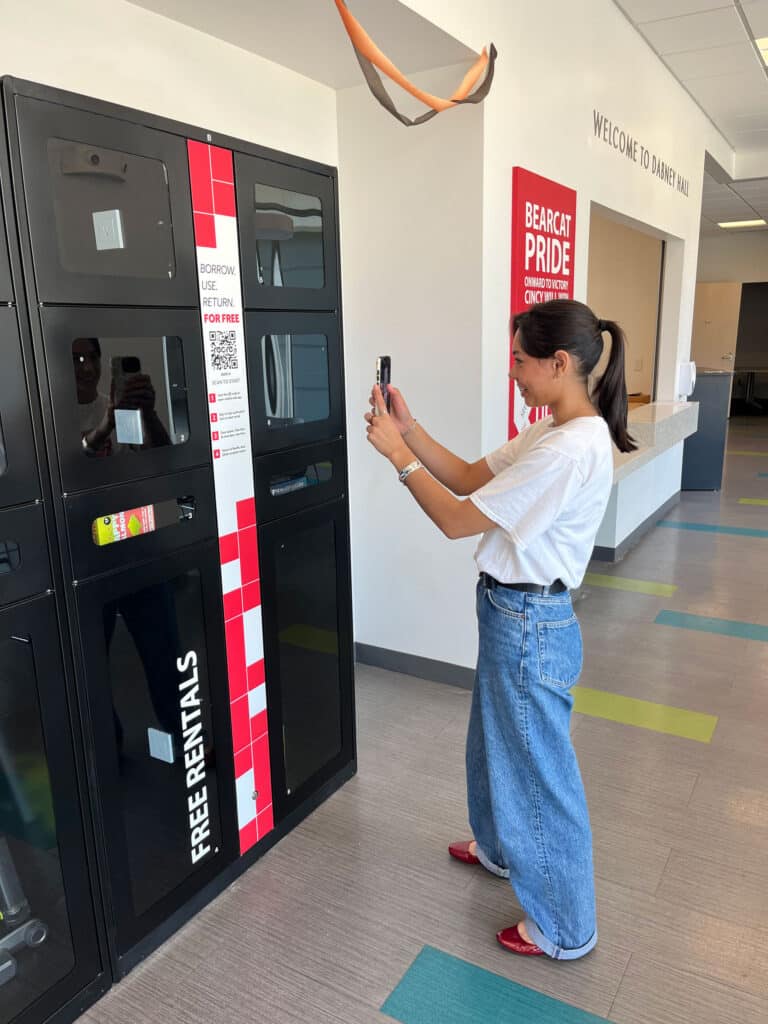
Through the RecRe units located across campus, students can borrow cleaning equipment, vacuums, calculators, recreational gear and other useful items around the clock. Cincinnati approached the rollout as an evolving service model, using student behavior to guide placement, inventory and expansion.
One interaction revealed the experience the university hoped to create. During a residence hall facility audit, a staff member encountered two students borrowing a two-player game from a RecRe locker. The roommates had known each other for about a week and had never played, but decided that day to play together – a decision only possible because of the ease of access the locker provided.
Moments like this happen throughout college campuses, but they can be difficult for leaders to see and quantify. Through RecRe, Cincinnati can track when and where students access resources and which items are being used, providing another view of activity within individual campus communities.
For Carl Dieso, the assistant vice president of Campus Services and Housing, Parking and Transportation Services at the University of Cincinnati, that visibility is part of the partnership’s value. Usage patterns have prompted deeper conversations about when and where his team needs to be present, while the self-service model makes these experiences easier for students to access without adding more routine transactions to staff workloads.
The initiative also offers lessons for student affairs executives evaluating automation: how to select the right transactions for self-service, test adoption before scaling and establish the operational ownership technology still requires.

Solving for Access and Staff Capacity
The project began with a combination of student-experience and operational goals. Students often need relatively simple items, but the traditional access model depends on the right office being open and a staff member being available. Cincinnati saw an opportunity to place useful resources closer to where students live and spend their time, while reducing the routine work of checking items in and out, tracking inventory and responding to basic requests.
The investment earned attention because it addressed several institutional priorities at once. In addition to extending access, it supported residential engagement, created a more consistent inventory process and introduced automation through a visible student-facing service. The university could also begin without redesigning an entire operation, then adjust locations and inventory based on student use.
Staff members raised reasonable questions before the rollout. They wanted to know who would own the inventory, how lost or damaged items would be managed, whether students would use the units and whether the operational savings would justify the investment.
According to Dieso, keeping the conversation focused on the student need helped the university move forward. The initial implementation was treated as a program Cincinnati would evaluate and improve, giving the institution an opportunity to learn before expanding.
Letting Student Behavior Guide the Rollout
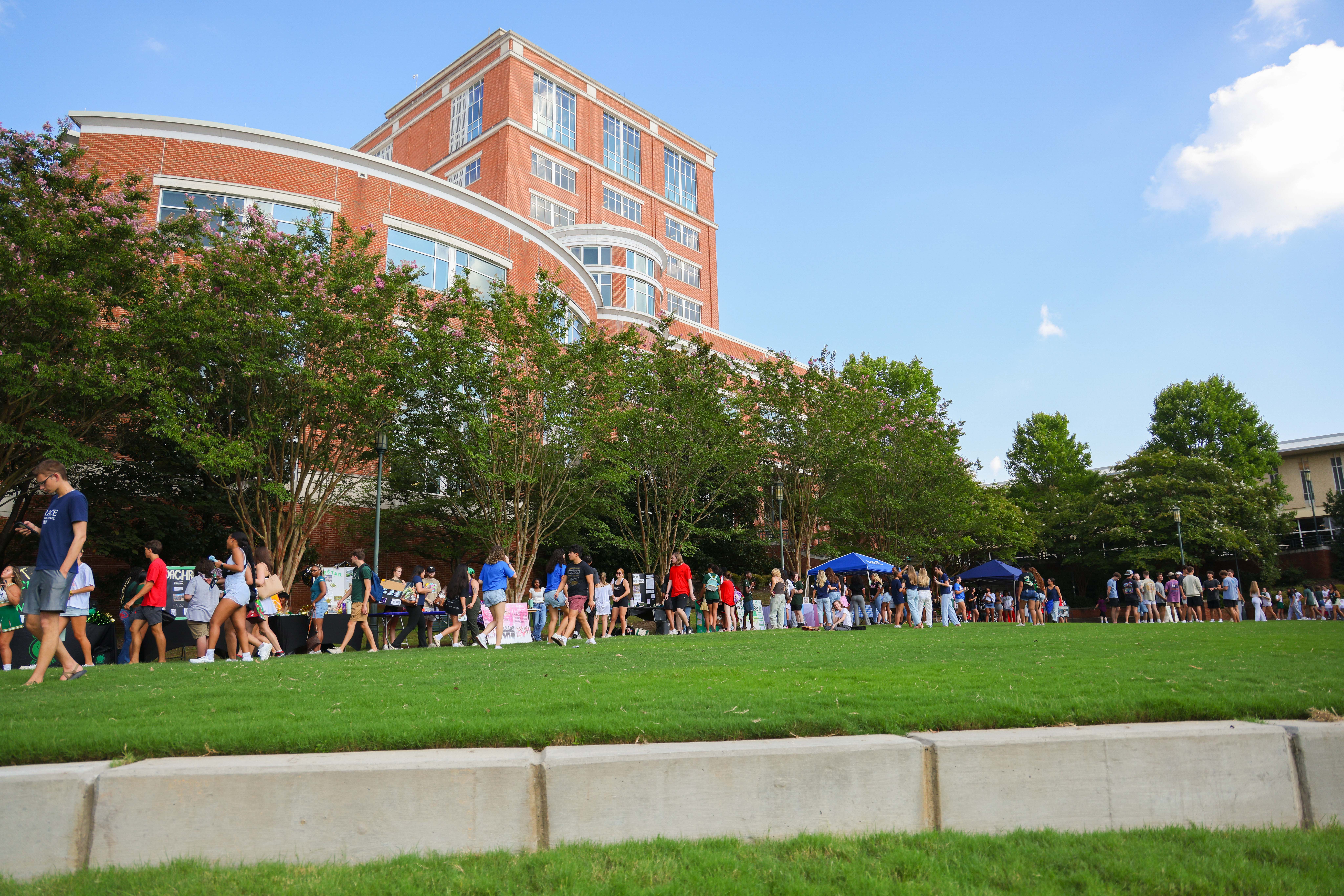
Cincinnati began by looking for locations where students regularly encountered a need and where the traditional service model created unnecessary barriers. Residence halls were an early priority because students may need cleaning equipment, household items, games or other essentials outside normal business hours.
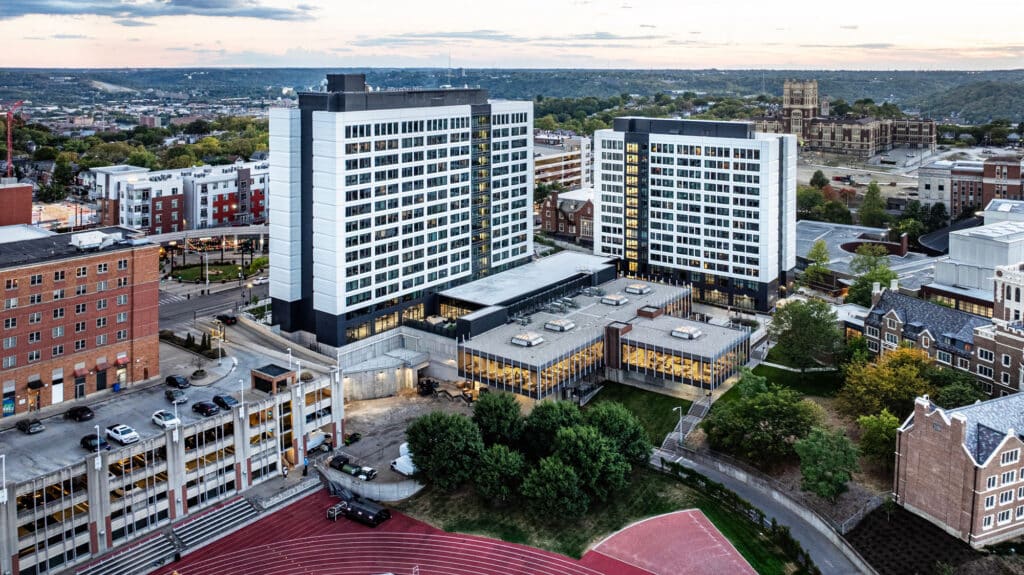
Dabney, a traditional residence hall on the Cincinnati campus with approximately 400 first-year students, became an ideal testing environment. First-year students often have a greater need for shared resources, and the location allowed the team to study adoption, usage patterns and operational needs. Strong engagement at Dabney gave the school the confidence to expand to additional residence halls and campus locations.
“The biggest lesson was that placement should be driven by student behavior,” said Dieso. “Starting in a high-traffic residential community gave us the data and confidence to scale the program strategically rather than relying on assumptions. We’re now looking at the ‘not so obvious’ places to see how we can further engage and support the student experience.”
During the first 90 days, the team monitored rental activity, popular items by location, return timing and whether the original inventory mix reflected the needs of each student community. The pilot was installed around spring break and stocked with cleaning supplies ahead of move-out. Cincinnati didn’t collect formal data connecting the two, but its housekeeping team described that period as one of the best years it could recall for room cleanliness during turn.
The experience reinforced the importance of matching inventory to location and season. Although the lockers are standardized, their contents can change as usage patterns reveal what each community needs. Cincinnati is now exploring how those patterns can inform adjustments during the semester and at the individual-community level.
Planning For the Full-Service Model
Automation reduced a recurring set of small transactions for staff, although Cincinnati hasn’t specifically quantified the time saved. Dieso said the value lies in creating more capacity for staff to assist students, address complex questions, maintain facilities, support community development and respond to issues requiring human judgment.
The technology still requires active management. Someone must review the data, maintain inventory, replace damaged or missing items and recognize when the needs of a location have changed.
“We learned ownership must be explicit at both the central and local levels,” said Dieso. “Who monitors the unit? Who responds when an item is overdue? Who pays for replacement inventory? Who decides that an item should move from one location to another?”
That governance work may be largely invisible to students, but it determines whether the service remains reliable. Dieso advised other institutions to identify an operational owner before installation and budget for the full-service model — versus just the locker hardware — including initial inventory, replacement and refresh costs, site preparation, signage, connectivity and staff capacity to monitor the program.
“Our best implementations treated this as a service-design project, not simply an equipment purchase,” said Dieso.
Applying a Broader Automation Strategy
The RecRe rollout reflects Cincinnati’s broader approach to automation in student services. Dieso said institutions must consider which interactions can become more convenient through self-service and where students still need direct support from trained staff.
“The objective isn’t to automate every interaction; it’s to distinguish between a transaction and a relationship,” explained Dieso. “If a student is facing a complicated housing, financial or personal issue, we want trained staff to have the time and capacity to help.”
The same philosophy can guide decisions involving forms, approvals, communications, inventory, access and other administrative processes behind the student experience. Cleaner operational data can also help institutions make services more responsive over time.
The RecRe program carries an equity consideration as well. Shared access can help students avoid purchasing items they may need only once or twice while making practical, academic and recreational resources available to more students.
For Cincinnati, the RecRe lockers provide a visible example of how a relatively straightforward operational solution can advance several priorities, including access, engagement, staff efficiency and responsible use of shared resources.
“The most defensible way to describe the savings is that RecRe has removed a recurring set of small transactions from staff workloads,” said Dieso. “More important than the raw number is what that time represents. It allows staff to spend less time managing objects and more time assisting students, addressing complex questions, maintaining facilities, supporting community development, and responding to issues that genuinely require human judgment.”

With more than a decade of experience in B2B journalism, Rachel Chonko is Editor-in-Chief of Student Affairs Executive and Peake Media. She specializes in connecting leaders with the ideas, strategies and peers that can help them navigate complex challenges and strengthen their organizations.
Through Student Affairs Executive, Rachel works closely with senior student affairs leaders across higher education to explore the issues commanding executive attention — from student success, data and assessment to organizational strategy, financial leadership, technology and stakeholder engagement. Her reporting is grounded in conversations with the leaders doing the work, with an emphasis on practical insights, institutional case studies and peer perspectives.
Rachel also helps shape the Student Affairs Executive Summit, an intimate, discussion-driven event designed to bring senior student affairs leaders together for candid conversations, relationship building and shared problem-solving.
Connect with Rachel on LinkedIn or explore her latest articles.