

As more universities and colleges embrace a whole-campus approach to health and well-being, student affairs leaders are finding the Okanagan Charter offers a roadmap for institutional change.
Across higher education, student well-being has become inseparable from student success. The metrics student affairs leaders are increasingly held accountable for — including retention, academic performance, campus safety and more — are all directly influenced by whether students, faculty and staff feel healthy, connected and supported.
Yet for many institutions, the response has remained largely the same: expand counseling services, offer more wellness programming and encourage healthier habits.
While those efforts remain essential, a growing number of institutions are taking a different approach. Rather than asking how to help individuals navigate unhealthy environments, they’re asking how to create healthier environments in the first place.
This shift in thinking sits at the heart of the Okanagan Charter.
Developed during the 2015 International Conference on Health Promoting Universities and Colleges, the Charter calls on higher education institutions to embed health and well-being into every aspect of campus life — from strategic planning and policy development to academics and community partnerships.
Rather than viewing health promotion as the responsibility of individuals or offices, the Charter encourages institutions to adopt a whole-campus approach where every department plays a role in creating healthier people, places and planet. Thousands of universities and colleges around the world participate in the International Health Promoting Campuses Network. In the U.S. alone, some 400 participate in the U.S. Health Promoting Campuses Network and over 40 campuses have formally adopted the Charter.
For student affairs leaders, the Charter often raises an important question: what does adoption actually look like? The answer is less about signing a document and more about changing the way an institution makes decisions.
The clearest way to understand the Charter’s impact is to look at what changed once institutions formally committed to it.
The University of Alabama at Birmingham (UAB) became the first university in the U.S. to adopt the Charter in December 2020, using it to build on current programs that already aligned with the framework’s goals.
Rebecca Kennedy, the assistant vice president for Student Health and Wellbeing at UAB and co-chair of the International Health Promoting Campuses Network, said this structure has since produced visible growth.
With the Charter as the foundation, UAB’s campus master plan now requires health-promoting principles to be factored into every building and project on campus. Live HealthSmart Alabama, a UAB community initiative, works with local partners to improve systems, environments and policies by developing a comprehensive plan to improve the health of residents in each neighborhood — often improving lighting, streets, sidewalks, access to quality healthcare and healthy foods.


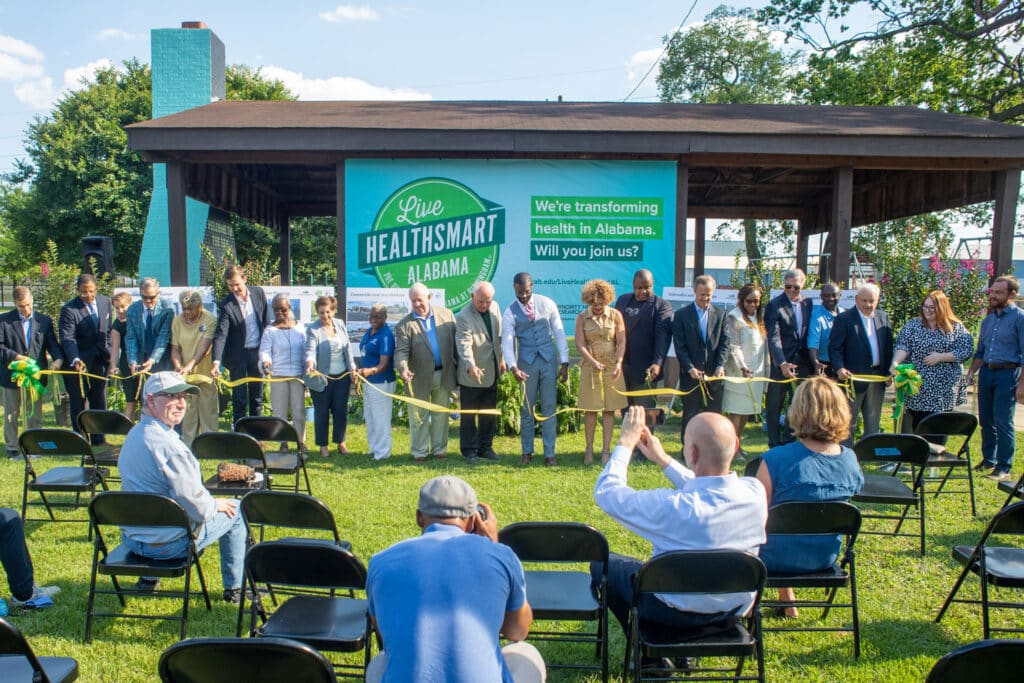
Michigan State University (MSU) took its adoption of the Charter and aimed it directly at how the university writes its policies.
By working with the policy office, Alexis Travis, the assistant vice president and assistant provost for University Health and Well-being at MSU and the Spartan Well-being Collective — which is co-led by her team — proposed health and well-being additions to the University’s Policy Development, Management and Review Policy.
This requires reviews built into every new or revised university policy, backed by an impact inventory that scores a proposed policy’s impact across eight dimensions of well-being. If the inventory shows a policy would detract from well-being across multiple groups, the review committee sends it back before it can move forward in implementation.
In addition, MSU’s broader well-being plan, built on university-wide assessment that drew roughly 5,000 responses, has since been embedded directly into the university’s strategic plan and its student success strategy.
Cornell University’s 2022 adoption of the Charter gave existing, previously disconnected efforts a reason to work together.
The university had already completed a student mental health review with a list of recommendations alongside separate workforce well-being and sustainability initiatives. According to Julie Edwards, the assistant vice president for Student Health and Well-being at Cornell, the Charter became the umbrella connecting them.
“We implemented policy changes that were already in the works with some of the student mental health review information, but the Charter gave us a reason to put them forward,” explained Edwards.
Cornell removed the median grade from transcripts and the dean’s list because they weren’t applied consistently across all colleges. They also capped credit loads after finding some students were carrying as many as 26 credit hours in a single semester.
The university also published an evaluation model designed to measure the collective impact of embedding health into campus culture, giving other student affairs leaders a way to see the return on their work beyond anecdotes.



Across these institutions, one common thread is that formal adoption didn’t create the work from scratch but gave existing efforts a shared language and a level of attention they didn’t have before.
One of the main principles of the Charter is relocating individual responsibility to institutional responsibility. Rather than asking students, faculty and staff to overcome barriers on their own, it encourages colleges and universities to examine the policies, environments and systems that influence well-being in the first place.
For student affairs leaders, this represents both a shift in mindset and in practice. Instead of viewing health promotion as the work of counseling centers, food banks, health services or wellness offices alone, the Charter positions well-being as an institutional priority spanning academics, facilities, dining, human resources and other campus operations.
Partnerships and collaborations across campus are a recurring theme for institutions adopting the Charter.
At UAB, the President’s Well-being Collaborative brought together senior leaders alongside students from across campus to identify where and how collaboration could strengthen health-promoting efforts. Cornell’s Community of Practice is another example, which engages a group of 105+ students, staff and faculty to support the Health Promoting Campuses initiative. MSU has a similar effort in the Spartan Well-being Collective, a group of 300 students, faculty and staff who work to support different priority areas laid out in the health and well-being plan.
“One single department cannot make all of this happen,” explained Travis. “While University Health and Well-being was the backbone, we’re also joined by our campus collaborators and partners to implement this work. We’re following the collective impact model.”


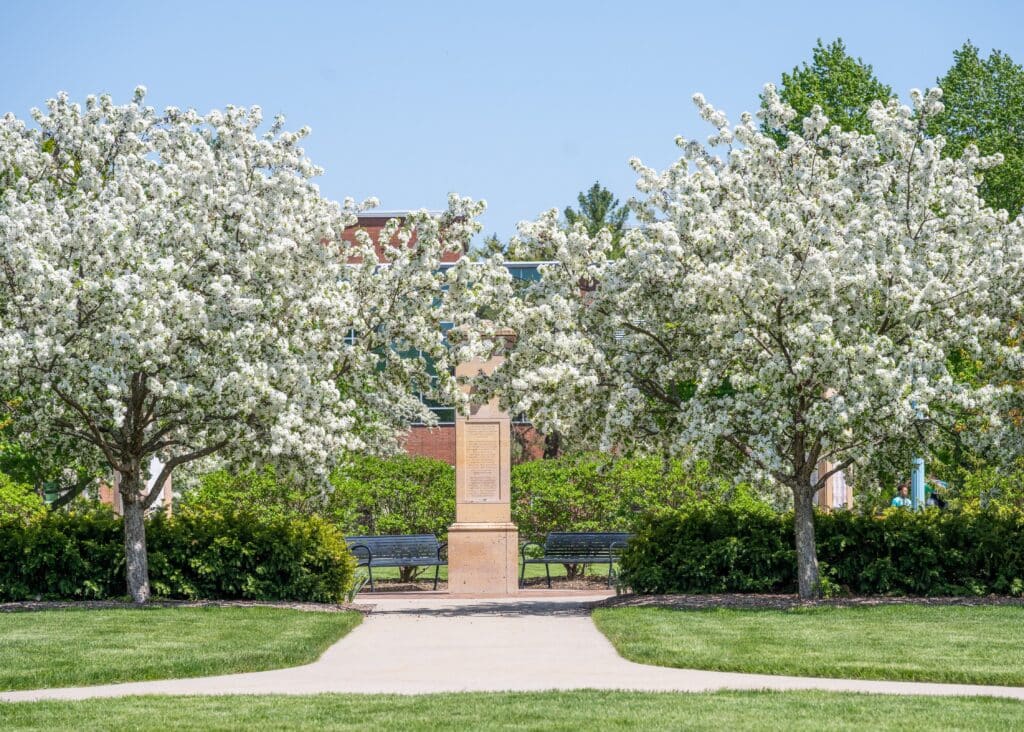
Overall, each institution’s implementation demonstrates the Charter’s intentional flexibility.
The release of the Limerick Framework for Action at the 2025 International Health Promoting Campus Conference reinforced that there’s no single model for becoming a Health Promoting Campus. Rather than replacing the Charter, the framework provides additional guidance while recognizing that institutions vary in size, structure, resources and priorities.
As such, not every institution engaging with the Charter’s ideas has chosen to adopt it formally.
Many colleges and universities are applying principles through strategic plans, cross-campus committees and collaborative initiatives without seeking formal designation as a Health Promoting University.
For these institutions, the Charter serves as a guide rather than a checklist — an approach modeling the spirit of the framework itself. The overarching goal is to create systems that respond to the unique needs of each campus community, not replicate other models exactly.
“That’s the beauty of the Charter,” said Kennedy. “It gives you a framework to tailor health and well-being to your particular community and population of students. It’s not just saying, ‘This is exactly what you need to do.’”
This flexibility can also make the Charter more approachable for student affairs teams looking to strengthen well-being efforts without launching an entirely new initiative. Like at UAB and Cornell, many of the Health Promoting Campuses began by identifying work already underway, then looking for opportunities to better connect those efforts.
In that sense, formal adoption becomes less important than the questions the Charter encourages leaders to ask: How can institutional policies shape positive student health outcomes? How do campus environments support and promote belonging? Which departments influence well-being even if they don’t traditionally see themselves as a part of the conversation?
The teams at UAB, MSU and Cornell demonstrate there’s no single pathway to becoming a Health Promoting Campus. One university may begin by tapping senior leaders while another may focus on policy development or strategic planning.
What matters most isn’t whether an institution formally adopts the Charter, but whether it embraces the philosophy behind it.
“The charter is focused on how we create healthy environments,” added Kennedy. “It reframes the approach from preventing disease to building capacity, changing the conditions within the environments to increase probability of a thriving, resilient, health-producing system rather than simply reducing exposures or preventing harm to individuals.”
As higher education continues to confront challenges related to mental health, belonging, retention and well-being, the Charter offers higher education leaders a framework for thinking differently about how institutional decisions shape the experiences of students, faculty and staff.
Ultimately, the Charter asks colleges and universities to move beyond responding to health challenges and instead design campuses where health and well-being are built into the culture itself. For student affairs executives, the ability to provide a roadmap for creating healthier institutions through collaboration, intentionality and systems-level change may be the Charter’s greatest contribution.

Gracie Moore is Assistant Editor for Student Affairs Executive and a lead editor for Campus Rec Magazine, where she covers the people, programs and strategies shaping the campus recreation profession.
Through her work across Peake Media’s higher education brands, Gracie connects with campus leaders to uncover practical ideas, emerging trends and real-world examples of how institutions are supporting students and strengthening the campus experience. Her reporting for Student Affairs Executive expands that focus to the broader priorities facing student affairs leaders, highlighting the strategies and perspectives helping institutions navigate change and advance student success.
Connect with Gracie on LinkedIn or explore her latest articles