
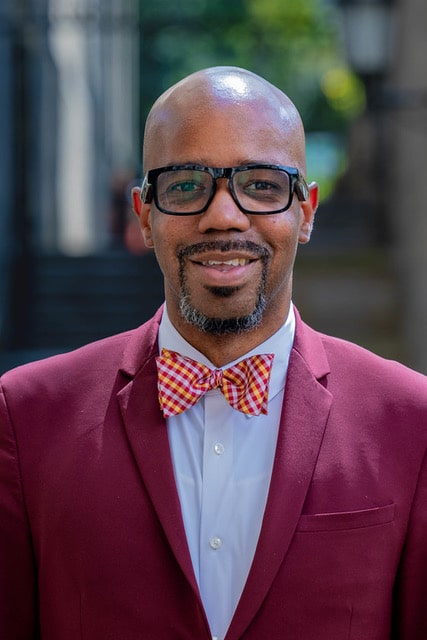
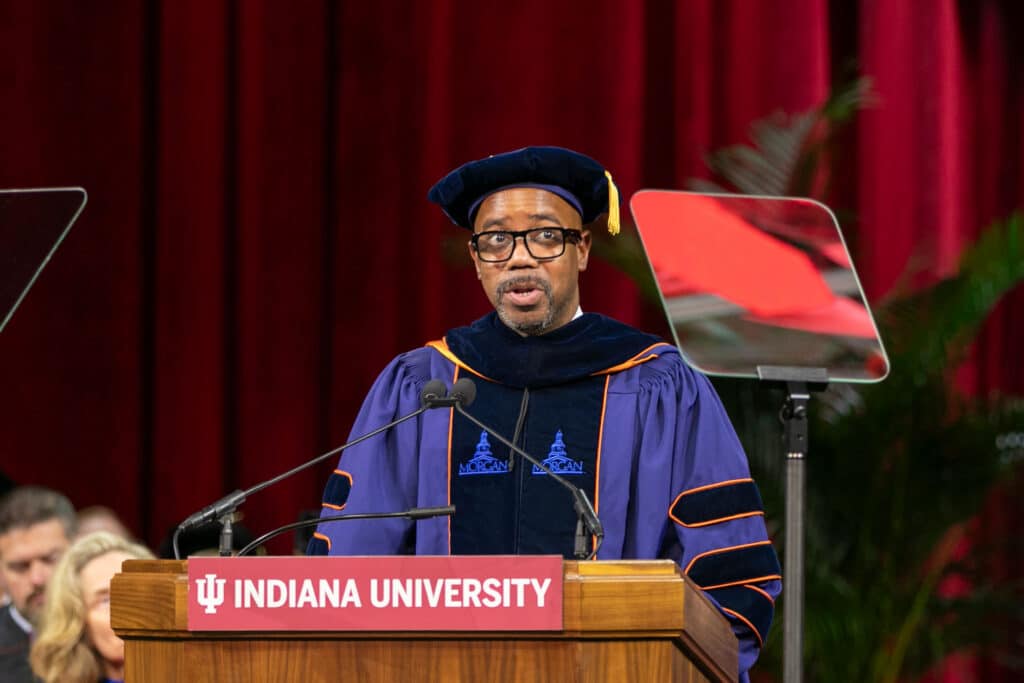
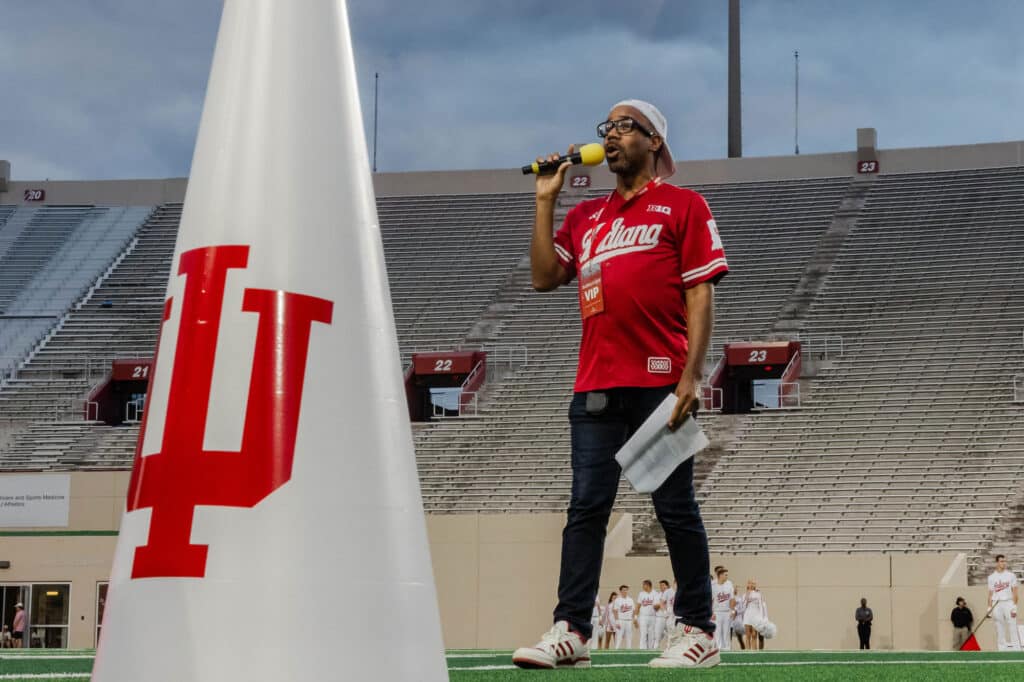
Dr. Lamar Hylton, the vice chancellor for student life at Indiana University, shares on student affairs leadership, institutional strategy and preparing for what’s next.
Dr. Lamar Hylton never planned on a career in higher education. He planned on the stage.
“I was going to be an operatic singer,” said Hylton. “So I went to a performing arts high school. I went to Morgan State University as an undergrad. I got my degree in voice performance with a concentration in opera, and I actually entered Ohio University through the School of Music. So I thought I was going to continue down that road.”
Instead, Hylton discovered the world of higher education — and a new passion.
He left the music program at Ohio University and entered the college student personnel program within the Patton College of Education, a pivot that would define the next two decades of his life.
Today, Hylton serves as vice chancellor for student life at Indiana University Bloomington (IUB), providing executive leadership for more than 35 departments and 2,500 staff who support the success, well-being and campus experience of more than 48,000 students.
Twenty years in, the arc still surprises him.
“I’m entering my 20th year, which really sounds odd because it’s felt like it’s gone by in a blip,” said Hylton. “Truly, I feel like I just graduated from my master’s program and entered my first professional gig. I remember it like it was yesterday.”
The road from a first job at Goucher College to the vice chancellor’s office at IUB ran through Asheville, North Carolina; Minnesota; and Kent State University in northeast Ohio — and through one of the most disruptive periods in the history of American higher education.
A COVID Vice President
After serving as dean of students, Hylton was named interim vice president for student affairs at Kent State University six months before the COVID-19 pandemic hit in 2020.
The scale of what landed on his desk in those first weeks was staggering. “The first order of business for me was moving 6,000 students out of their residential environment in a 36-hour span,” Hylton recalled.
And he was doing it without the security of a permanent title.
“I was still interim, and so I felt like every day was a job interview,” said Hylton. “So if this goes wrong, I can probably not only consider it a failure, but I probably can consider my job done.”
It didn’t go wrong, but it also didn’t let up.
“Every day I’m on the phone, on Zoom, on Teams with all kinds of stakeholders in ways that aren’t the norm for how we move in the daily course of our work,” explained Hylton. “Our faculty president, our health officials in the community, students, the leadership team of the institution — we were all joined at the hip.”
The experience reinforced the value of adaptability, empathy and relationships — lessons Hylton would carry into his next role.
“We talk a lot in higher education about shared governance,” said Hylton. “We talk a lot about being one institutional community with one aim, and that was really role-modeled for me during the COVID experience. What I’ve learned and what I’ve continued to try to pull on even after the COVID moment was the importance of building those relationships and sustaining them in ways that help us to advance the work and help us to show up as one institutional community in support of the student experience.”
Looking back, Hylton doesn’t frame that season as simply a stepping stone. But he does credit it with shaping the leader who would eventually walk into IUB’s strategic planning process.
“That moment in time, which felt like eternity, but it was a moment in time, taught me a whole lot,” said Hylton. “I believe that the platform and the foundation that I had built at Kent was exactly what was needed to propel me to this role here.”
Enter IUB 2030
By the time Hylton interviewed at IUB in 2023, the university had already unveiled the IUB 2030 Strategic Plan, a seven-year roadmap organized around three pillars — Student Success and Opportunity, Transformative Research and Creativity, and Service to Our State and Beyond.
Unlike plans that get printed, bound and shelved, IUB attached measurable objectives to each pillar and committed to publishing annual progress updates and dashboards.
The plan also reshaped the organizational chart. What had been the Division of Student Affairs became the Office of Student Life, associate vice provosts became associate vice chancellors, and Hylton’s role was reimagined specifically to advance the Student Life components of the plan’s strategic objectives
“The way that Student Life is shaped at IUB, and even the way this particular role that I occupy is shaped, was born out of the plan,” said Hylton. “The institution was embracing Student Life as a key contributor and partner in that work.”
For Hylton, that institutional commitment was part of the draw to Bloomington. It also presented a challenge: How do you translate a university-wide strategy into the everyday work of thousands of employees?
From IUB 2030 to the Cornerstone of Student Success
Student Life’s answer became the Cornerstone of Student Success, its own strategic plan designed to complement IUB 2030.
Two of its key architects were Brian Richardson, Hylton’s chief of staff and associate vice chancellor for administration and community, and Libby Spotts, the senior associate dean of students.
Student Life had undergone significant organizational change, expanded its portfolio and adopted a new mission, vision and values. It needed what Richardson called a “guiding light” — and Hylton gave Richardson and Spotts an aggressive timeline to create one.
They began in October 2024. Before putting pen to paper, however, Richardson and Spotts launched a series of listening tours.
“We know that with any type of change management plan, you have to get the buy-in from different people,” said Richardson.
They sought feedback from students; hourly, part-time and full-time employees; front-desk staff; graduate students; parents; community members; alumni; and faculty. The goal was to understand what those stakeholders expected from Student Life and how its work should advance IUB 2030.
The breadth was intentional. Student Life encompasses positions ranging from programmers and counselors to physicians, administrative support and front-desk employees.
“One goal was that at the end of the process, our people — all of our almost 2,500 employees — see themselves in this plan,” said Richardson. “That it’s reflective of the work that they do, and it accounts for the variety of positions that exist within Student Life.”
The second goal was to ensure the finished plan led to action.
“We didn’t want it to just be a paperweight on people’s desks,” said Richardson. “We wanted action that’s taken from this process.”
Richardson said the process was also intended to avoid a familiar change-management trap: well-intentioned leaders deciding what others need without first hearing from those affected.
“Without doing the intentional work of seeking out those voices and experiences of oftentimes those who may not feel like they’ve ever had a chance to give voice to a project this big, we wanted to ensure that didn’t happen,” said Richardson.
The Cornerstone was introduced in June 2025, roughly nine months after the process began.
“Do I wish we had more time? Absolutely,” said Richardson. “Did we get the thing done, and was it reflective? From the feedback of our people, I would say that we did.”
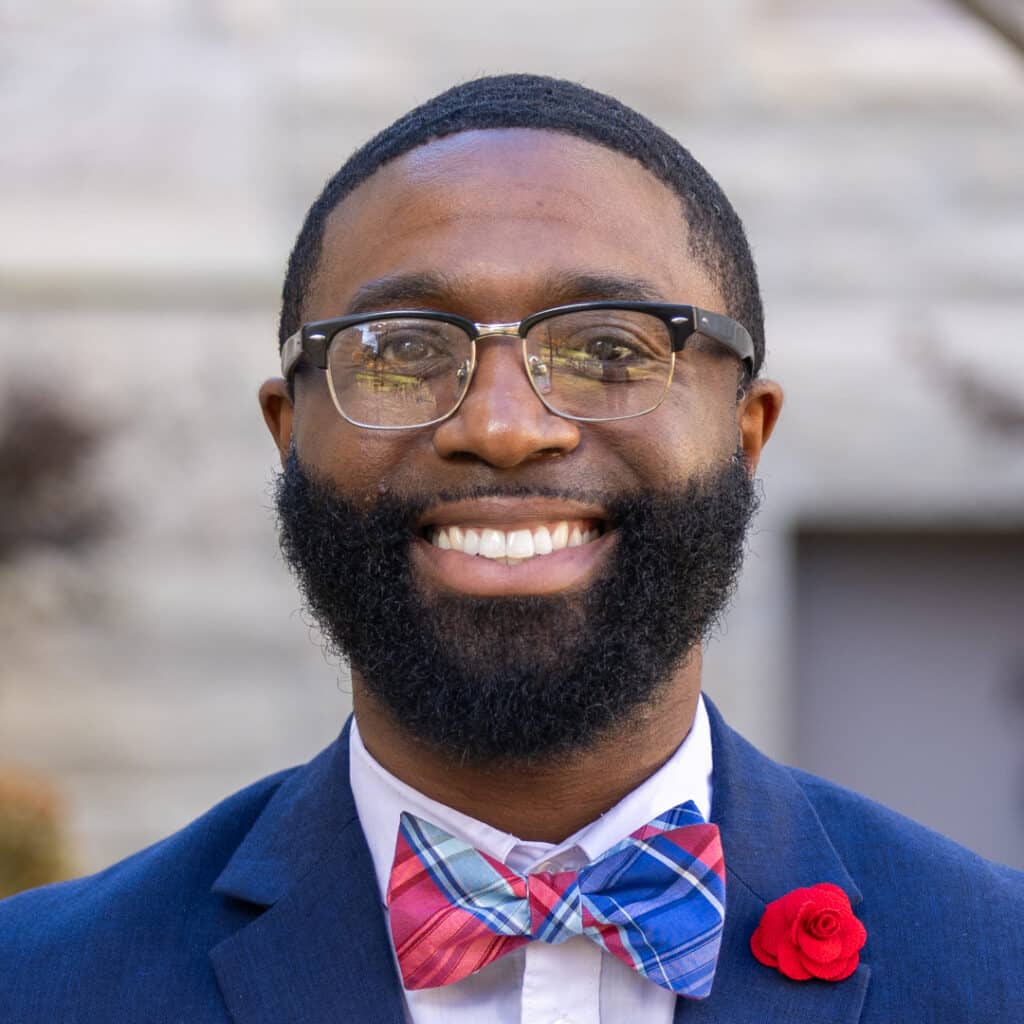
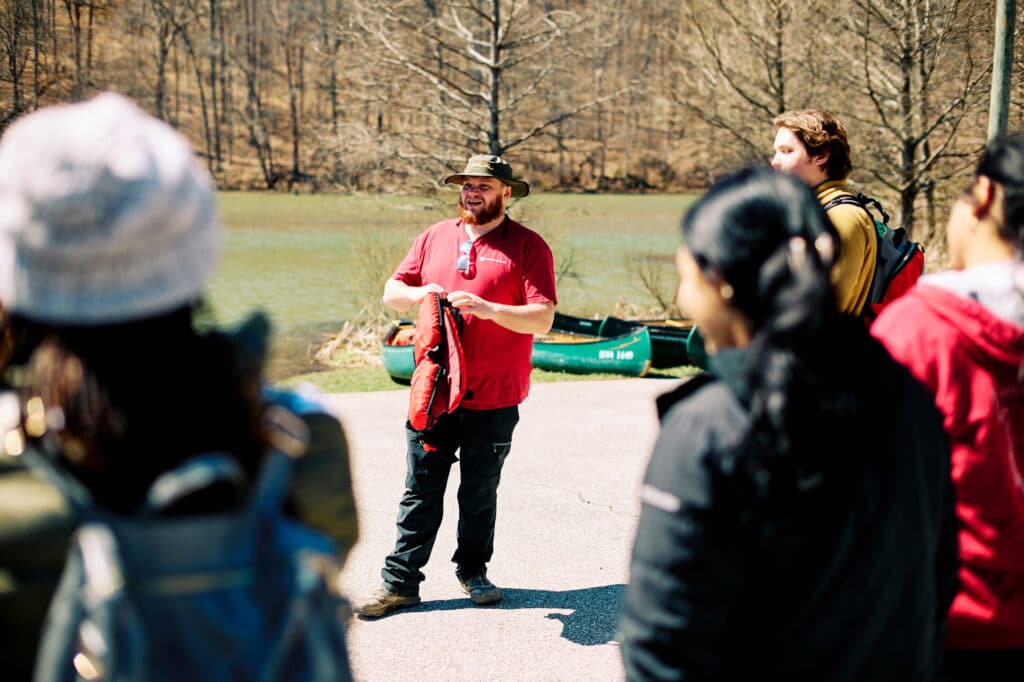
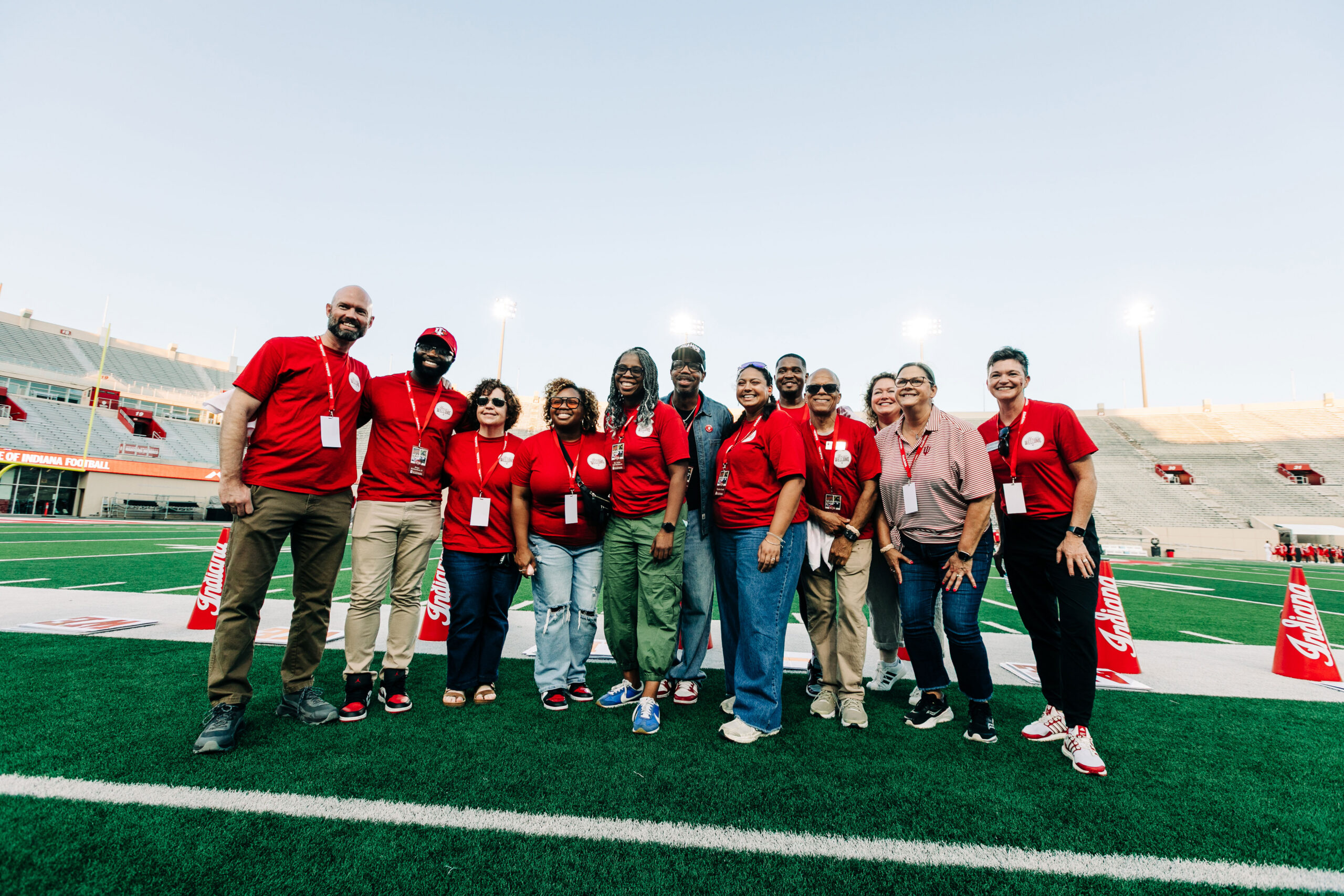
at IU Bloomington on Saturday, March 28, 2026. (Photo by Eric Rudd/Indiana University Office of Student Life)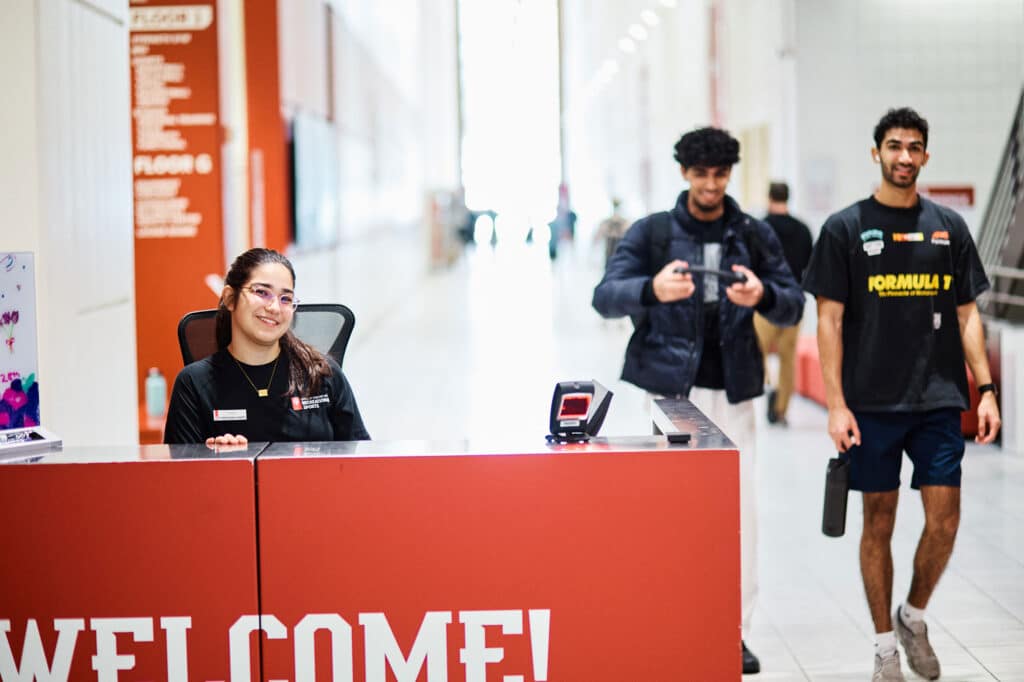
One Student, One IU
Executing the Cornerstone requires looking beyond Student Life itself.
For Hylton, one of the clearest examples is the relationship between Student Life and Academic Affairs.
“Our partnerships with faculty and other academic leaders is, in fact, the way that a Student Life program succeeds on a college or a university campus,” said Hylton. “We are here to contribute meaningfully to students’ academic journeys and experiences.”
The distinction between academic and co-curricular experiences may make sense on an organizational chart. From the student perspective, Hylton argues, there is no such divide. It’s one IU experience.
That means Student Life can’t operate in isolation.
“It can’t just be, ‘I’m doing this for Student Life, and I’m going to do it over here in my own fiefdom and context, and the campus around me is left to do whatever they do,’” said Hylton. “We have to be integrated into what the campus is doing to move the outcomes forward together in partnership.”
That integration raises another question: How does Student Life know whether its work is actually moving those outcomes?
IUB has built a dedicated assessment, research and impact unit within Student Life to help answer that question.
“The unit really provides the data to help us tell our story much more affirmatively,” said Hylton. “And so the usage of data, both quantitative and qualitative, cannot be underscored enough when you’re having to communicate your story, your value to other stakeholders.”
The Cornerstone adds another layer of accountability. Departments establish goals and objectives aligned with the plan, while implementation teams follow their progress — creating opportunities to assess what’s working and adjust as circumstances change.
Richardson argues that measurement alone isn’t enough. “I see the numbers, but what do they mean?” he said. “And I think that’s where we can truly capture the essence of the work that’s being done in Student Life.”
For Richardson, that means connecting outcomes such as retention and persistence to the individual experiences behind them.
“I think about conversations with a student where the student says, ‘Hey, I wouldn’t be here today if it wasn’t for this office. I wouldn’t have the best friends that I have. I wouldn’t have met my spouse, my partner. I wouldn’t be the leader that I am had I not gone to this experience that was created by Student Life,’” said Richardson. “And that’s where I like to jokingly say, we’re the makers of moments within the Office of Student Life. And I want to hear those stories.”
Building the Culture to Execute It
The emphasis on listening and shared ownership extends to Hylton’s leadership team.
Richardson, who is pursuing his dissertation on psychological safety in the workplace, has found his research reflected in his own working relationship with Hylton.
“I come to work and know that I’m valued, I know that I’m appreciated,” said Richardson. “I’ll be challenged. I can challenge. I can speak up. My opinions and thoughts matter.”
He traces that dynamic to an early conversation after stepping into the chief of staff role. Richardson asked what Hylton needed from him. “He said, ‘I need somebody who can be real, help me see multiple perspectives,’” recalled Richardson.
Richardson describes Hylton as an authentic but strategic leader — someone who considers who will be affected by a decision while keeping the organization moving forward. During periods of change, he said, Hylton’s willingness to connect personally with employees has also helped build trust.
“After going through the research and literature around psychological safety in the workplace and emotional intelligence, [I can say] I work with a guy who does those things,” said Richardson.
For Richardson, Hylton has also given him room to develop his own leadership voice — trusting him “to go out and do the things that I’ve brought you here to do.”
It’s the same principle that runs through the Cornerstone process: people are more likely to take ownership of the work when leaders create room for their voices within it.
The Landscape Ahead
That kind of adaptability will be increasingly important as Student Affairs leaders navigate a more complex higher education environment.
Free speech is one example. IU recently adopted the Chicago Principles, a widely cited free-expression framework that Hylton said provides a platform for thinking differently about how the university educates students on free speech and freedom of expression.
The issue crystallized for him in a recent conversation with an academic colleague, who described students as needing room for “rough draft moments.”
“They’re not at their most polished self, they’re not in their finished product, and they’re espousing these thoughts and experiences and ideas in a very rough draft kind of format,” recalled Hylton. “The collegiate environment needs to be one that is conducive to those rough draft moments.”
But free expression is just one issue competing for executive attention.
“I would probably add a changing political and regulatory landscape,” said Hylton. “But certainly enrollment, certainly demographic shifts and student needs are changing. Health and well-being, mental health will always be on that list. Fiscal realities are certainly on that list.”
The challenge is that none exists in isolation.
“Our job is to weave all of that together because pulling on one string will pull three others out,” said Hylton. “And I think today’s vice presidents for Student Affairs have got to be nimble in the environment to respond to the ever-evolving and rapid evolution of the landscape of higher education.”
That complexity also makes demonstrating Student Affairs’ broader institutional value more important. “We contend with still needing to be able to show value to our campus environments beyond being crisis responders,” said Hylton.
The more proactive contributions — to retention, persistence, graduation and strategic enrollment management — can be less visible.
“It’s not always seen how we make contributions proactively to educational outcomes like retention, persistence and graduation,” said Hylton. “It’s not always seen how we’re prime contributors to the enrollment funnel and to a strategic enrollment management effort for a campus environment.”
It brings the conversation back to the work underway at IU: aligning Student Life with institutional priorities, measuring its outcomes, building partnerships across campus and getting better at communicating why the work matters.
Ready for What Comes Next
For all the complexity facing higher education, Hylton’s outlook lands on confidence rather than fatigue.
“I think, in fact, I know leaders within Student Affairs are best positioned and best primed to navigate evolving contexts because of the nature of our work,” said Hylton. “And I think we will emerge stronger and well-positioned to continue to move higher education forward.”
It’s a fitting perspective for a leader whose career has followed anything but a fixed path.
From an operatic career that never materialized, to a vice presidency forged during a pandemic, to a strategic plan developed in nine months, Hylton has repeatedly found himself navigating what he didn’t expect.
Twenty years into a career he never planned, the lesson may be less about predicting what comes next than being prepared to lead when it arrives.

With more than a decade of experience in B2B journalism, Rachel Chonko is Editor-in-Chief of Student Affairs Executive and Peake Media. She specializes in connecting leaders with the ideas, strategies and peers that can help them navigate complex challenges and strengthen their organizations.
Through Student Affairs Executive, Rachel works closely with senior student affairs leaders across higher education to explore the issues commanding executive attention — from student success, data and assessment to organizational strategy, financial leadership, technology and stakeholder engagement. Her reporting is grounded in conversations with the leaders doing the work, with an emphasis on practical insights, institutional case studies and peer perspectives.
Rachel also helps shape the Student Affairs Executive Summit, an intimate, discussion-driven event designed to bring senior student affairs leaders together for candid conversations, relationship building and shared problem-solving.
Connect with Rachel on LinkedIn or explore her latest articles.