
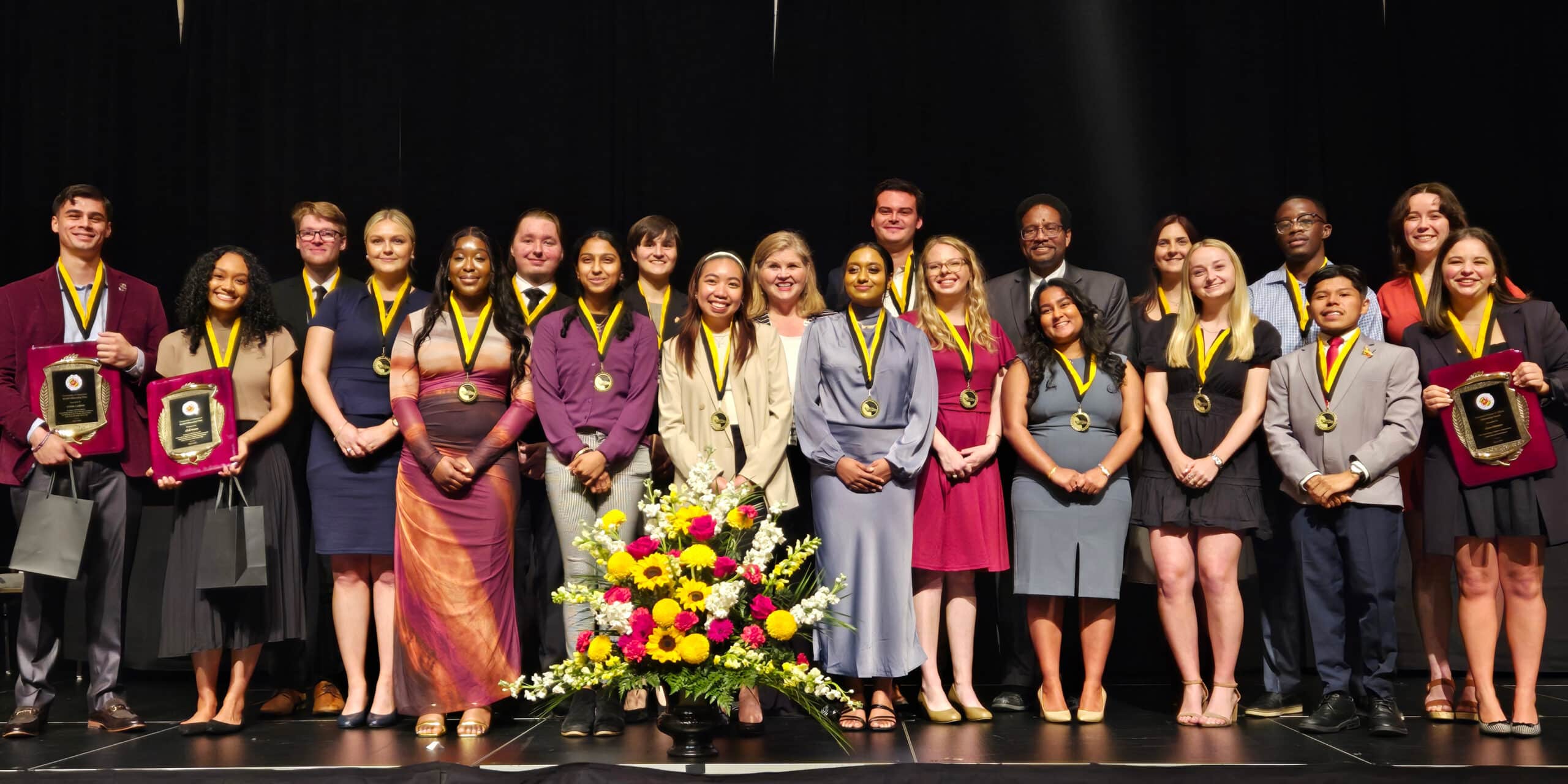

Every student who steps foot on a college campus brings a unique set of circumstances that ultimately shape their experience.
For Dr. Patty Perillo, her circumstances at the University of Delaware involved being the first in a large family to attend college.
“My father was the youngest of 15,” said Perillo. “I have seven brothers and sisters. I have 80 cousins. And I was the first in my family to go to college. So, I really had to find my way, and I’m just really grateful that some people paid attention to me just to make sure I continued to find my way.”
In fact, certain mentors and leaders pouring into Perillo and encouraging her to persist throughout her college career is what led her to pursue her own career in the field.
“It’s so easy to lose first-generation college students, or students who don’t know the way,” explained Perillo. “I had a ton of familial support, but they didn’t understand college life. And I didn’t want college campuses to lose the Patty Perillos of the world — because I believed they had potential —and that’s really why I decided to work in higher education.”
This calling has guided Perillo through an impressive 40-year tenure in higher education, including stints at the University of Delaware, The State University of New York, the University of Maryland Baltimore County (UMBC), Davidson College, Virginia Tech and the University of Maryland (UMD).
Much of that journey has taken place at UMD, where Perillo currently serves as vice president for Student Affairs. It’s also where she earned her Ph.D. in public and community health with an interdisciplinary academic partnership with the Student Affairs program in the College of Education. Prior to a seven-year tenure at Virginia Tech as vice president for Student Affairs and assistant professor of Higher Education, she also served in multiple senior leadership roles at UMBC within the student affairs division.
It was during Perillo’s pursuit of her doctoral degree that she fell in love with the UMD campus community and culture.
“When I came back to UMD, there were colleagues that were here when I was here in the early to mid-’90s that stayed the whole time,” said Perillo. “So I came back to a community of 80 people who I knew and loved and cared about, so it was lovely to re-enter.”
Showing Up Matters
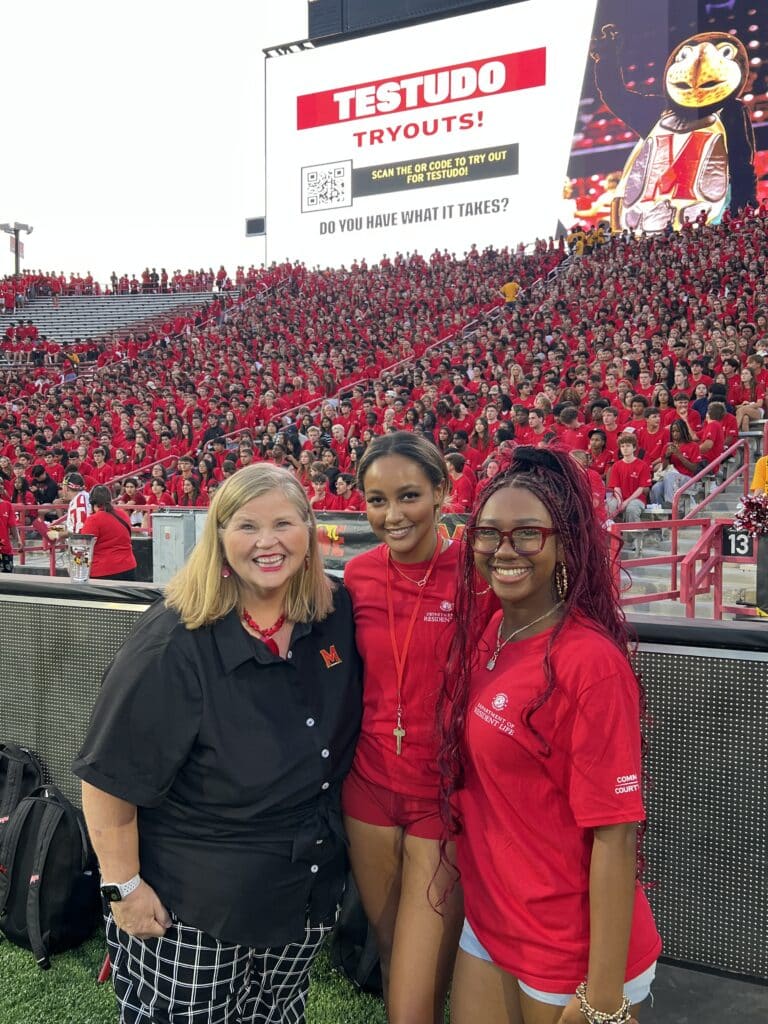
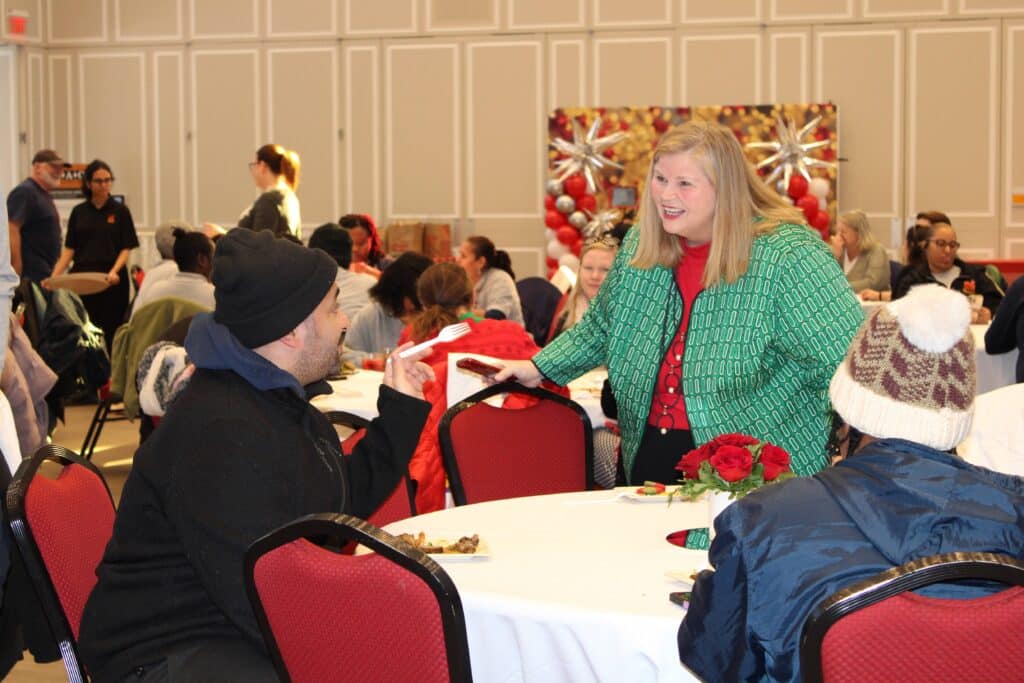
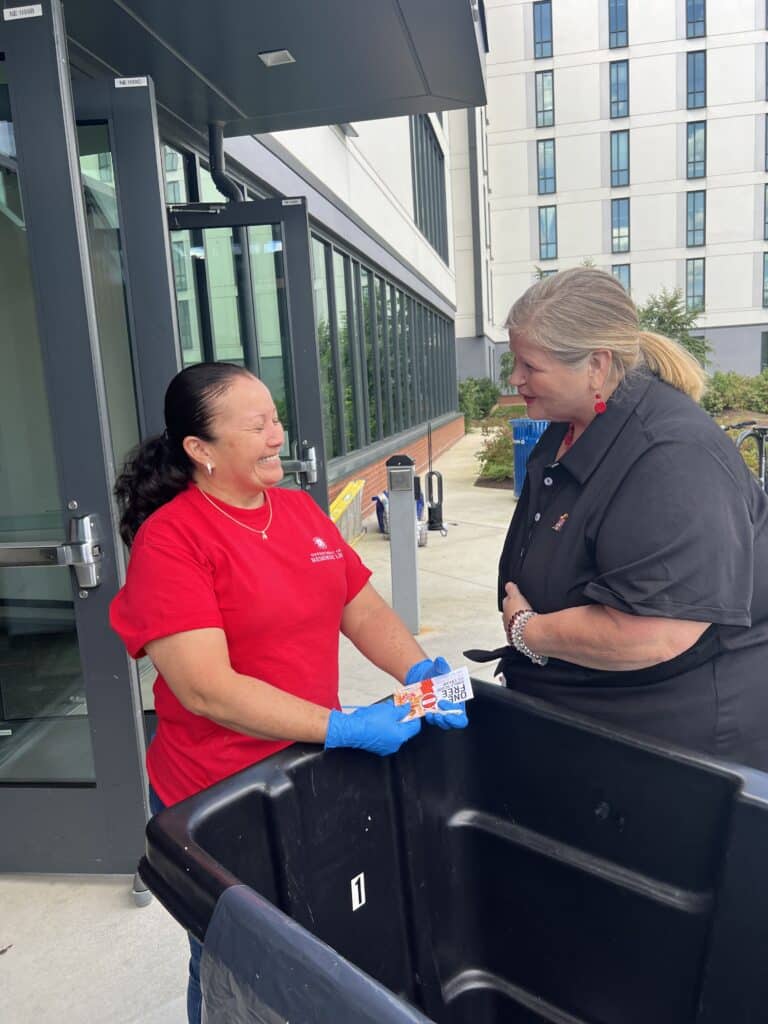
No matter the institution she’s serving at, a throughline of Perillo’s leadership has been her focus on building strong relationships with students and staff alike.
A common trope among senior student affairs leaders, or any leader for that matter, is that the further they climb up the ladder, the more detached they become from those they’re leading. After all, leading a student affairs division on a college campus is a large task on any campus, particularly at UMD.
The Division of Student Affairs at UMD spans 17 departments; a team of 4,000 students, faculty and staff; an annual budget of $350 million; and is responsible for nearly 30 percent of the campus’ physical capital. As such, it could be easy for Perillo to be bogged down by administrative tasks within the four walls of her office and lose sight of her connection to people.
Instead, she prioritizes presence and care in all interactions with others — recognizing no work gets accomplished without people at its center.
“Patty truly cares about the work, and she truly cares about students and people,” said Andrea Goodwin, the assistant vice president for Student Affairs and Dean of Students at UMD. “I’ve never seen anybody as busy who still has time to check in with their team.”
One of the most poignant examples of Perillo’s focus on relationships took place during her first 90 days as the vice president of student affairs at UMD. Instead of entering the position with a pre-set list of new strategic priorities for the division, Perillo first sought to understand. She prioritized meetings with senior leadership, with the goal of getting feedback on the division’s greatest challenges and opportunities.
Fairly quickly, it became apparent there was an opportunity for greater alignment.
“One of the things I believe very strongly is one of the responsibilities as a leader is to create organizational structures that facilitate connection and synergy, and don’t create barriers and angst,” said Perillo. “So at the very beginning, after all the interviews with the 17 directors and all the AVPs, I consistently heard people say, ‘We really lead well by department, but we don’t lead well across the division.’”
To remedy this, Perillo began a restructure of the division, putting departments with similar goals or areas of scope together under one supervisor, and instituting a strategic plan and strategic commitments for the division as a whole.
However, according to Goodwin, the way Perillo underwent this reorganization is another great example of her focus on relationships and employee engagement.
Instead of just stating how she thought the division should reorganize, Perillo led a workshop with senior staff to get their input on what made sense to group together. In the workshop, each department was represented by a physical card, with the team exploring different structures and groupings until a consensus was found.
“I can still remember doing the exercise because it really made you sit and think, ‘OK, do these two units go together, or is this unit better somewhere else?,’” recalled Goodwin. “I feel like we have more ownership in it because we physically had to walk around the room and really place our cards and think about what structure made the most sense.”
As a result, Goodwin explained there was much greater buy-in to the restructure, since everyone had the opportunity for their voices to be heard. “If you’re part of the decision-making, you’re so much more committed to making it work,” she said.
Another key change Perillo led as vice president of Student Affairs was the identification of four co-curricular learning goals for students that would live within and be championed by the division.
These goals are what the division wants students to learn when they’re outside the classroom, and include wanting students to engage inquisitively, practice compassion, act with courage and work for justice.
The benefit of stating these goals, combined with the reorganization and a new strategic plan for the Division of Student Affairs, have created further alignment for the organization as to what it’s aiming to achieve through its programs and services.
“You have 17 departments who now have a shared vision, mission and values, and that helps us keep us aligned,” said Perillo.
Another great example of Perillo’s focus on people, relationships and divisional synergy is the creation of what are called “leadership circles” for similar roles, such as coordinators, AVPs and housekeeping staff. These leadership circles meet frequently and provide a platform for employees to surface issues, strategize and collaborate.
According to Warren Kelley, the senior associate vice president for Student Affairs at UMD, these leadership circles ensure every team member within the division has a voice and a platform for advocating directly to Perillo — a task that otherwise would be impossible for such a large division with so many employees.
“Patty creates structures and processes that ensure we’re touching large parts of our community in ways beyond her own personal touch,” said Kelley.
This extends to students as well. According to Kelley, Perillo prioritizes time spent with students, attending socials and events, hosting Town Halls, and leading outreach during times of crisis.
In fact, it’s during these times Kelley believes Perillo’s leadership and focus on relationships shines through. As an example, he reflected on George Floyd’s murder in 2020, which happened just as Perillo was taking on the mantle of vice president of student affairs.
“Patty, as an unknown vice president, felt she needed to reach out to our Black community, which was in such pain and distress, and anger and fear,” said Kelley. “And I watched her — because she asked me to participate with her as a partner — create connection and community and a sense of care with these students.”
This was especially significant, explained Kelley, due to the fact these meetings had to take place over Zoom due to the ongoing COVID-19 pandemic.
“It started with all of the things you would imagine in that kind of setting — the tension the suspicion, all the things you can imagine — and ended in this place where it felt like a little community of people we could connect with, and they were looking forward to these discussions, and opening up and talking with us in a way that it’s hard to do face to face,” recalled Kelley.
Some leaders shy away from sensitive matters. For Perillo, she understands that leaders don’t have to have all the answers. Instead, seek to understand, and give people your time and attention.
“If I’ve learned anything about leadership, it’s that showing up matters,” said Perillo. “Just the act of showing up says to people they matter. Sometimes the best that you can do with and for another human being is just to be present with them.”
The Future of Student Affairs
Looking to the future, Perillo believes this philosophy of showing up is more important than ever, especially as it relates to mental health and well-being.
“I think people are struggling mightily,” said Perillo. “Not just students, but faculty and staff too.”
As a result, Perillo is placing greater emphasis on the mental and physical health of both employee and student cohorts, exploring frameworks, programs and pathways to ensure people get the support and help they need to thrive.
And much of this work is being done in collaboration with the Division of Academic Affairs.
As an example, following an 111% increase in students needing accommodations over five years, Student Affairs and Academic Affairs worked together to rethink how the university provides accommodations. In addition, the two divisions launched a mental health task force for students, faculty and staff to understand what resources currently existed that may need more attention and where there were gaps.
The taskforce discovered substantial resources across campus at UMD, but little coordination. As a result, a Mental Health and Wellbeing at Maryland website was launched, organizing all resources into one place students and staff could go to be pointed in the right direction.
“One of the things that I really like about the university is that the provost and I are really great partners, because we know that academic and student affairs — learning happens in both those domains,” said Perillo.
Ultimately, everything Perillo does in her role as vice president of Student Affairs is rooted in her personal experience as a first-generation college student. People poured into her, and she is now giving back through the power of presence, active listening, and most importantly, time spent.
“Above anything else is my time with students,” said Perillo. “You hear this narrative in student affairs, ‘If you want to be a vice president, you don’t get time with students anymore.’ And I say, ‘If you want to be a vice president, if you don’t get time with students, you’re doing something wrong.’”

With more than a decade of experience in B2B journalism, Rachel Chonko is Editor-in-Chief of Student Affairs Executive and Peake Media. She specializes in connecting leaders with the ideas, strategies and peers that can help them navigate complex challenges and strengthen their organizations.
Through Student Affairs Executive, Rachel works closely with senior student affairs leaders across higher education to explore the issues commanding executive attention — from student success, data and assessment to organizational strategy, financial leadership, technology and stakeholder engagement. Her reporting is grounded in conversations with the leaders doing the work, with an emphasis on practical insights, institutional case studies and peer perspectives.
Rachel also helps shape the Student Affairs Executive Summit, an intimate, discussion-driven event designed to bring senior student affairs leaders together for candid conversations, relationship building and shared problem-solving.
Connect with Rachel on LinkedIn or explore her latest articles.