
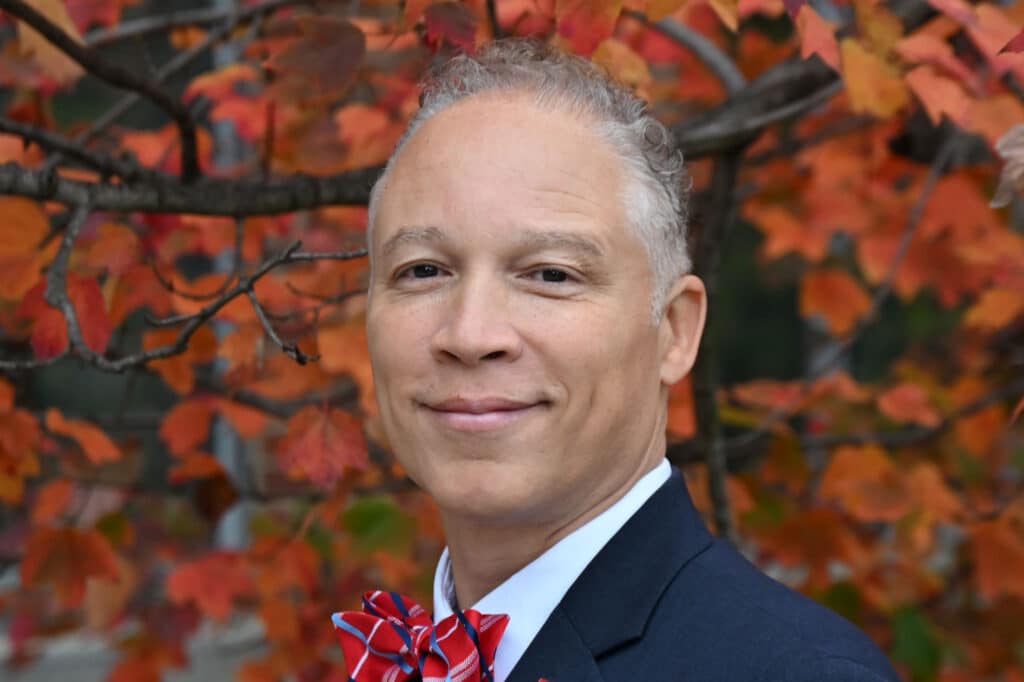
During his first summer at Denison University in Granville, Ohio, Ricardo Hall made a point of stopping the students he encountered on campus to ask about the coming year. As the new vice president of student affairs at Denison, he wanted to know: What were they looking forward to? What made them anxious?
It was 2024, and Hall thought the presidential election might come up. Instead, several students brought up the university’s new dining vendor.
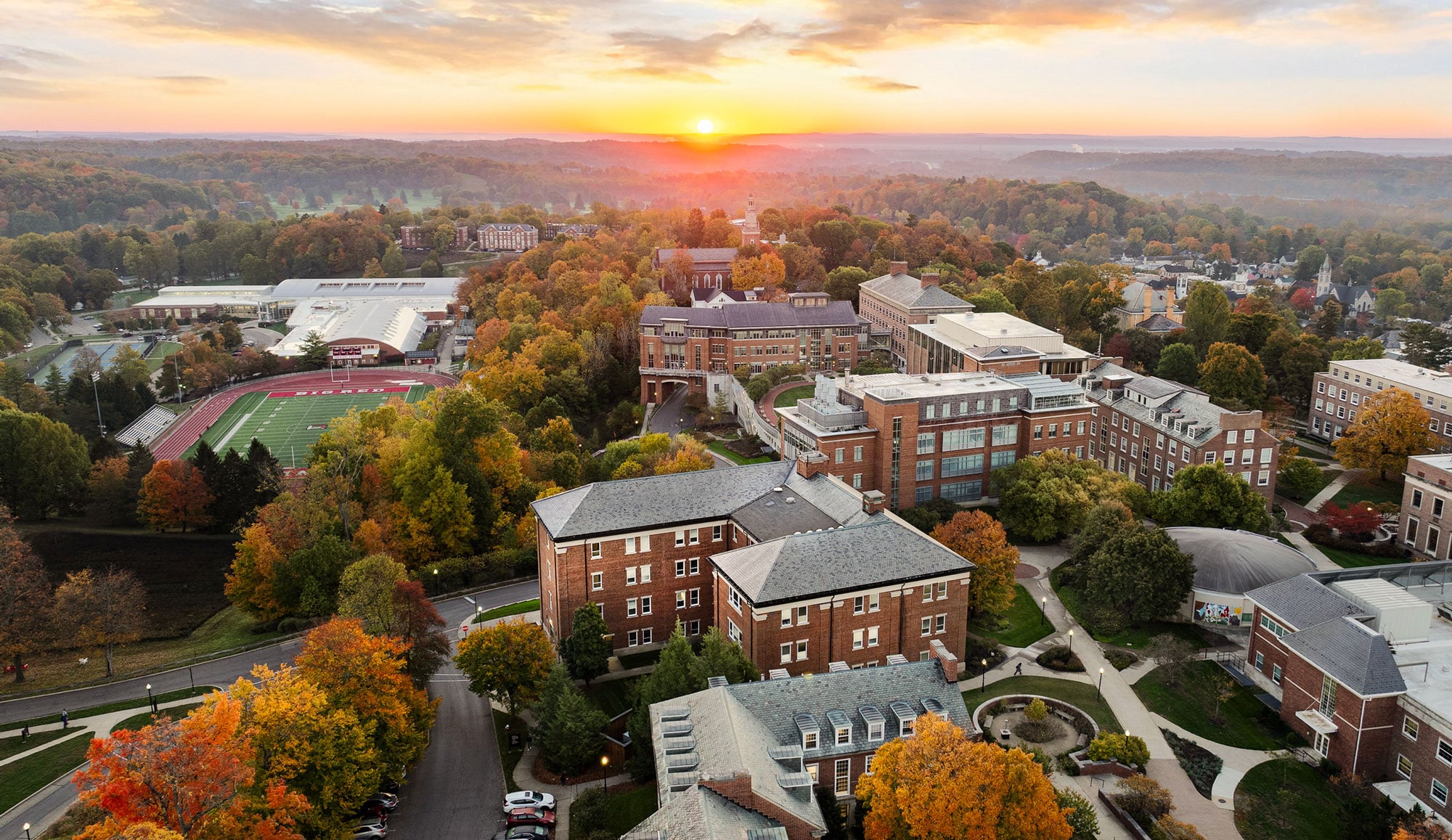
For Hall, their answers offered an early lesson in the rhythms of a residential liberal arts college. Nearly all of Denison’s roughly 2,500 students lived on campus. A change in dining affected where they ate, the people they saw and the routines they had established.
“Dining is really personal when all of or the majority of your meals are on campus,” said Hall.
Some student athletes, for example, were concerned they could no longer get chicken breast at lunch every day. Students also knew the people serving their food. As feedback came in, Hall said the vendor adapted quickly.
Those conversations helped him understand the attention students paid to decisions administrators might otherwise expect them to take in stride. At Denison, students could bring those concerns directly to him or the president, and they did.
“It doesn’t mean that we jump every time a student groans about something, but we do listen and we work with them as much as we possibly can,” said Hall.
Learning a New Campus
Hall’s arrival at Denison in 2024 marked a return to his home state after 30 years away. His career had taken him to institutions including Clemson University, Wake Forest University and the University of Miami, as well as Lehigh University, where he served as vice president for Student Affairs.
Although he had spent much of his career at private institutions, Denison introduced him to an entirely undergraduate campus at a scale he hadn’t experienced before.
He was impressed by how quickly the college could move from an idea to action, as well as the relationships among students, faculty and staff. Students cared about the institution and one another in ways he noticed early.
Still, understanding that community required time spent listening, including when students disagreed with a decision he supported.
During his first year, Hall worked on introducing a first-year residential quad. The idea had come up in conversations as he joined the university, including with the president. When Hall discussed it with students, he heard encouraging responses. Some wished they had experienced something similar themselves.
But when the university announced that East Quad would become the first-year quad, upperclassmen objected. They saw desirable housing being reserved for incoming students, including suites they felt should go to juniors.
The response revealed a concern that hadn’t been resolved by enthusiasm for the broader concept. Students could appreciate a first-year community and still feel the housing decision came at their expense.
For Hall, it was another part of learning how students experienced the institution. Their feedback gave him a clearer understanding of what a change meant to different groups, even after research and consultation had informed the decision.
Using What Students Share
That attention to student feedback also shapes Hall’s approach to assessment.
Before arriving at Denison, he noticed Student Life didn’t have its own assessment professional, a position he had valued at Lehigh. Through conversations with colleagues in the provost’s office, he learned Denison was strengthening its assessment and data staffing. Those professionals, based in the provost’s office, also partner with Student Life.
Hall found a division already comfortable gathering and using information to evaluate its work.
“The folks, my folks, aren’t intimidated by data,” said Hall. “They see all of its potential uses to improve the student experience.”
One example comes from the Office of the First Year Experience, which surveys students three weeks into their time at Denison. Questions address whether they have made friends, connected with faculty or experienced financial worries, along with how likely they think they are to return the following year.
The office then shares findings through a campus presentation called “data and donuts.” At the time of Hall’s interview, the survey had received responses from more than 40% of the first-year class.
Feedback has also informed changes to orientation. Denison eliminated some overnight off-campus trips and placed greater emphasis on visits to nearby Columbus. Students have asked for more time to organize their rooms or shop, giving staff another consideration as they plan future schedules.
The division is gathering information about the first-year quad as well, while launching a sophomore experience. Hall sees this work as part of understanding what will encourage students to continue at Denison, where he reported retention above 90%.
“We have to pay attention to what works with our students and what doesn’t work,” said Hall. “So we’re constantly gathering and interpreting data.”
A Full Student Experience
Beyond helping students settle into college, Hall wants them to explore interests that extend beyond any one identity or affiliation.
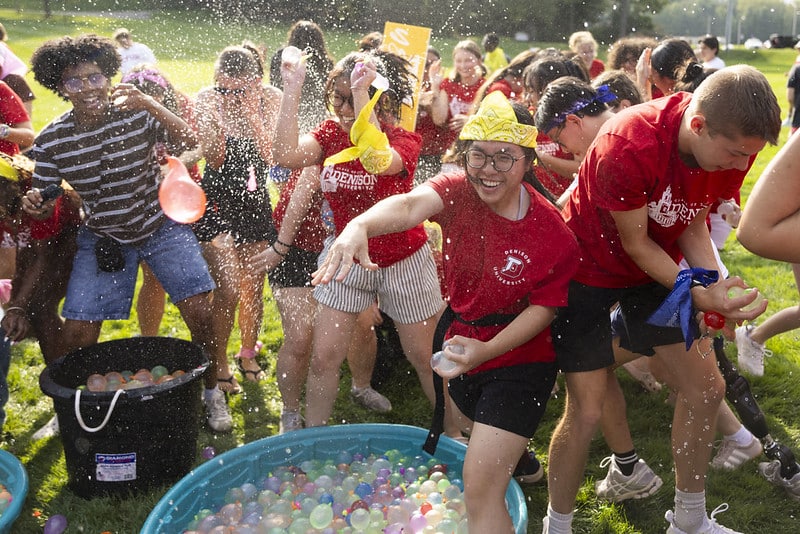
Early in his time at Denison, he noticed varsity athletes returning to campus to serve as community advisors, the university’s equivalent of resident assistants. Students auditioned for performances regardless of their major, and study abroad was an expectation for many, including athletes.
“They actually live a fully loaded student experience here,” said Hall.
That stood out against a previous institution where Hall heard students described as belonging to three groups: fraternity and sorority members, athletes, and everyone else. Those divisions could form within the first few weeks of college and shape the next four years.
At Denison, he sees students participating across those boundaries. Staff encourage them to develop demonstrated strengths while also asking what else they might want to pursue.
That approach extends to campus programming. Hall described cultural and religious observances as opportunities for the entire community to participate and learn, with outreach reaching beyond the students most directly connected to a particular event.
He believes those experiences contribute to the communication, leadership and interpersonal skills graduates take into employment or further education.
They also give Student Life a stake in the larger conversation about the value of college. Hall believes students should help shape that discussion, including which parts of the experience they consider worth the cost.
“We offer a lot of bells and whistles that regional campuses don’t,” said Hall. “Is that something that’s sustainable? Is that something that students will say is really important to them? They should very much be a part of that conversation.”
Questions Worth Asking
Hall also sees a need for continued attention to changes in student behavior, including alcohol and drug use.
Although he has been pleasantly surprised by Denison’s relatively low number of conduct cases, he raised concerns about substance use that can be harder to detect. Faculty have shared suspicions that students may be attending class under the influence without the smell of alcohol or marijuana.
His observations raise questions about what institutions can learn from conduct reports alone, and whether education efforts are keeping pace with the substances students may encounter. Hall sees room for continued education even where wellness programming and required instruction already exist.
Within his own division, another question has been on his mind: Are staff enjoying the work?
Hall recently posed that question to a staff member about their team. After more than 30 years in the profession, he still finds the work fulfilling and believes leaders should regularly consider whether that remains true for themselves.
He acknowledges that the work can be heavy. He also credits a supportive president, cabinet and campus community with helping sustain his own enthusiasm.
For Hall, time with students remains part of that enjoyment. He drops into student organization meetings, sometimes stopping by for a few minutes when he sees food being served. He takes care to let students continue with their agenda, while inviting them to ask him questions in return.
Those visits give students an opportunity to know him beyond his title. They also keep him close to the experiences his division is responsible for supporting.
“In my role, I think it’s important that they see me, and they believe that I genuinely enjoy being around them and providing services for them,” said Hall. “For me, I still enjoy the work 30 years in.”

With more than a decade of experience in B2B journalism, Rachel Chonko is Editor-in-Chief of Student Affairs Executive and Peake Media. She specializes in connecting leaders with the ideas, strategies and peers that can help them navigate complex challenges and strengthen their organizations.
Through Student Affairs Executive, Rachel works closely with senior student affairs leaders across higher education to explore the issues commanding executive attention — from student success, data and assessment to organizational strategy, financial leadership, technology and stakeholder engagement. Her reporting is grounded in conversations with the leaders doing the work, with an emphasis on practical insights, institutional case studies and peer perspectives.
Rachel also helps shape the Student Affairs Executive Summit, an intimate, discussion-driven event designed to bring senior student affairs leaders together for candid conversations, relationship building and shared problem-solving.
Connect with Rachel on LinkedIn or explore her latest articles.